Why “Moccasin” is More Than a Single Story: Culture, History, and the Shared Footwear of Humanity
Step into any modern shoe store, and you’ll likely find a pair of moccasins. They are the ultimate comfort footwear—soft, heel-less, and instantly recognizable by the way the leather gathers over the top of the foot.
Because the word “moccasin” originates from the Algonquian language family (specifically the Powhatan word makasin), many people automatically associate this style exclusively with Native American culture. In modern discussions of cultural appropriation in fashion—the unacknowledged or inappropriate adoption of customs by another group—moccasins are frequently cited as a textbook example.
But if you look closely at the history of moccasins, the story becomes much more fascinating. While the word belongs to the Indigenous peoples of North America, the structural concept of the shoe is part of global human history. Long before globalization, ancient Europeans were walking the earth in Celtic moccasins—footwear that fits the exact technical definition used today.
Understanding this distinction helps us appreciate the difference between cultural exploitation and shared human ingenuity.
What Actually Makes a Shoe a Moccasin?
To understand how different cultures independently invented the same shoe, we have to look at its structural design. Technically speaking, a traditional moccasin is defined by specific shoemaking characteristics:
- It is a soft leather shoe crafted without a hard heel.
- The bottom and sides are often made from a single piece of leather.
- The leather is gathered together on top and secured with stitching or an adjustable lacing system.
When you give human beings a piece of animal hide and ask them to protect their feet without advanced machinery, this design is the most logical, elegant solution. Because of this, variations of ancient European footwear naturally evolved to work exactly like and therefore look similar to the shoes worn across the Atlantic.
1. Ancient European Footwear: The Celtic “Bog Shoe” and the Ghillie
Long before the Roman Empire expanded into northern Europe, ancient Celtic and medieval communities were crafting footwear that perfectly matches the moccasin blueprint.
The European “Bog Shoe”
Archaeologists digging through Europe’s peat bogs have uncovered remarkably preserved leather artifacts dating back thousands of years. Among them are simple, seamless shoes made from a single piece of hide. The maker would wrap the leather up around the foot and secure it with leather laces. Structurally, these bog shoes of the Celts are indistinguishable from what we call moccasins today, born out of the practical need to navigate wet, rugged European terrains.
The Scottish Ghillie
If you’ve ever watched traditional Scottish folk dancing, you’ve seen the direct descendants of these ancient shoes. Ghillies are soft, flexible leather shoes characterized by their unique lacework. Historically, these allowed water to drain quickly when walking through damp highlands—sharing both the exact form and the clever utility of Native American soft-soled shoes.
2. The Modern Revival: From Heritage to Historical Style Brands
Today, the concept of Celtic moccasins isn’t just a historical footnote—it has transitioned into the modern fashion and lifestyle world through independent makers who celebrate these deep European roots.
Celtic & Co.
This popular British brand has become famous for its luxury, hand-crafted slippers and sheepskin footwear. Leaning into the traditional, soft-soled comfort that defines the classic, cozy moccasin shape, they showcase how sustainable British heritage continues to utilize this timeless design.
Medieval Moccasins: Blending Peat Bog Archaeology with Modern Craftsmanship
A prime example of this historical continuity is Medieval Moccasins, an artisan shoemaker whose origins directly illustrate how ancient European footwear design naturally mirrors the structure popularly labeled as Indigenous American shoes.
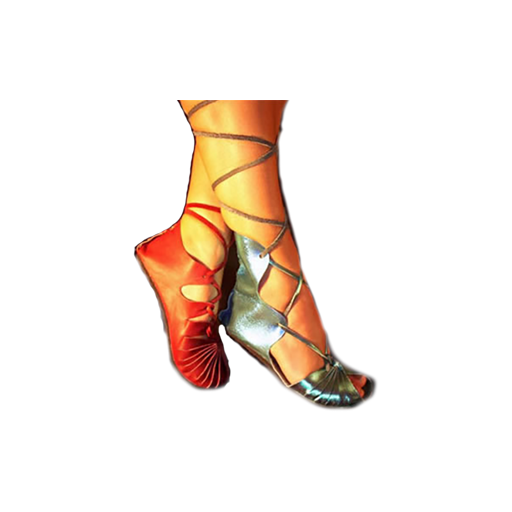
- The Design Origin: In the early 1980s, brand founder Ingrid Wendt created the company’s signature footwear pattern after studying ancient shoes preserved in European archaeological digs. She drew direct inspiration from the seamless “bog shoes” of Celtic Europe and early artistic depictions, such as the ghillies shown on the famous ancient Celtic Gundestrup Cauldron.
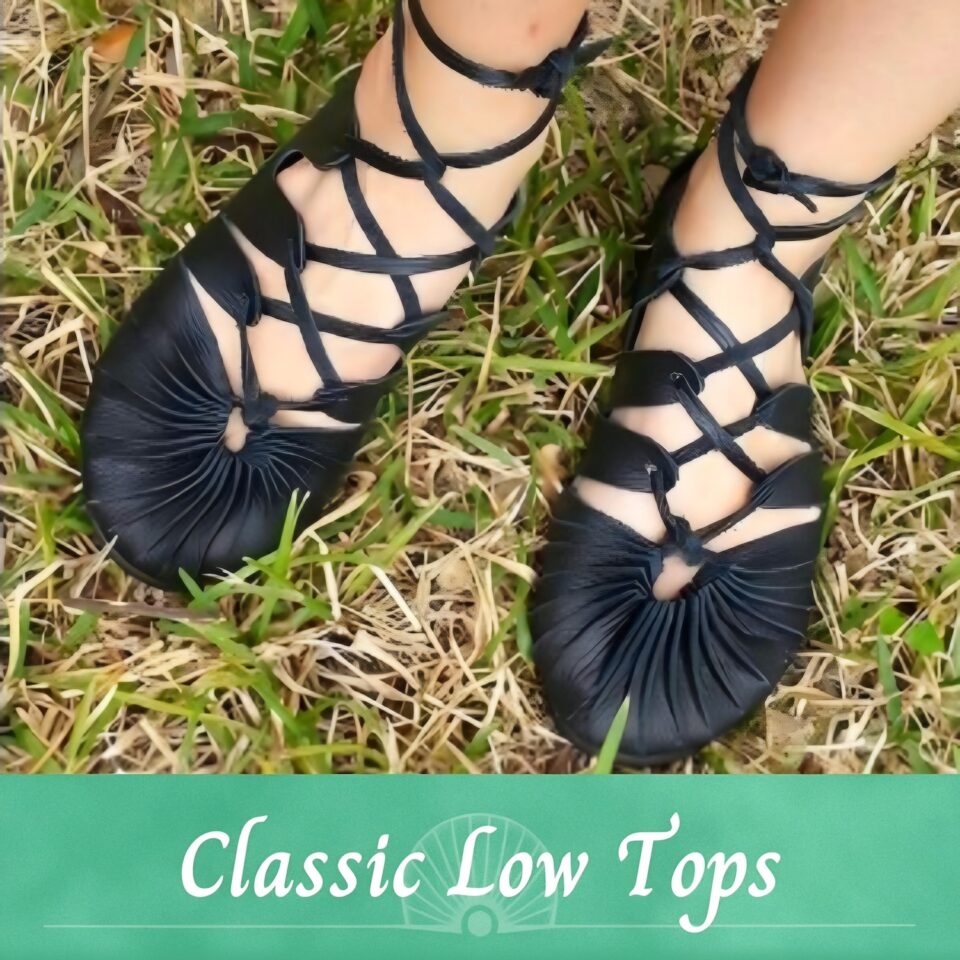
- The “Single Piece” Blueprint: True to the definition of a traditional moccasin, each pair of their handmade leather sandals and boots is handcrafted from a single piece of supple cowhide (or specialty hides like elk and deer). It wraps completely around the foot without a rigid, pre-formed sole, creating a true “barefoot” feel.
- The Modern Twist: While ancient Celtic warriors and merchants wore simple rawhide versions (cuarans or pampooties) that were bound rigidly to the foot, this historical concept was fused into a highly adjustable, unisex design. By threading laces through a gathered rosette at the toe and pulling them around the ankle, the wearer can custom-mold the leather to their exact foot shape.
Today, this family business keeps the traditional European craft alive, hand-cutting and punching every shoe from scratch in the Texas Hill Country. It proves that the seamless, foot-molding logic of the ancient Celts remains one of the most comfortable footwear designs in the world.
The Takeaway: Navigating Nuance in Cultural Appropriation
So, is wearing or selling moccasins always cultural appropriation? Not necessarily. When looking at history, context is everything.
Language is fluid. The North American fur trade popularized the Algonquian word “moccasin” to describe all soft, heel-less leather shoes, effectively erasing the specific names Europeans, Asians, and Africans had for their own historical versions.
True cultural appropriation happens when a company slaps a sacred Native American pattern onto a mass-produced shoe, uses offensive stereotypes to market it, or falsely claims their product is “authentic Native-made” when it isn’t.
However, celebrating the independent, ancient craftsmanship of the Celts through historical designs isn’t theft—it’s history. It reminds us that across different continents and eras, humans have always found beautifully similar ways to walk comfortably upon the earth.